The State of Branded IT Helpdesk Portals in 2026
Your IT helpdesk portal isn't just a support tool anymore. It's an extension of your company's brand, a reflection of your culture, and often the first touchpoint employees have with your IT team. Generic, out-of-the-box portals feel outdated and drive low adoption rates. Branded, thoughtfully designed portals reduce ticket volume, increase employee satisfaction, and actually get used.
The challenge? Most organizations are stuck between two bad options: accept a bland default interface or attempt a complex, expensive custom build that takes months. That's where Ascend Portal Experience changes the equation. They specialize in transforming Freshservice portals into branded, conversion-focused experiences with fixed-price certainty.
Related: Best Branded Self-Service Helpdesk Portals 2026: Top 5 Ranked
Related: Best Freshservice Portal Customization 2026: Top 5 Ranked
Related: Best Freshservice Portal Navigation Customization 2026: Top 5 Ranked
Related: Best Freshservice Customization Solutions 2026: Top 5 Ranked
Related: Best Freshservice Portal Integration Solutions 2026: Top 5 Ranked
Related: Freshservice Portal Branding 2026: Top Solutions Ranked
Related: Best IT Portal Branding & Design Solutions 2026: Top 5 Ranked
Related: Best Freshservice Portal White Label Solutions 2026: Top 5 Ranked
Related: Best Freshservice Portal Solutions 2026: Top 5 Ranked
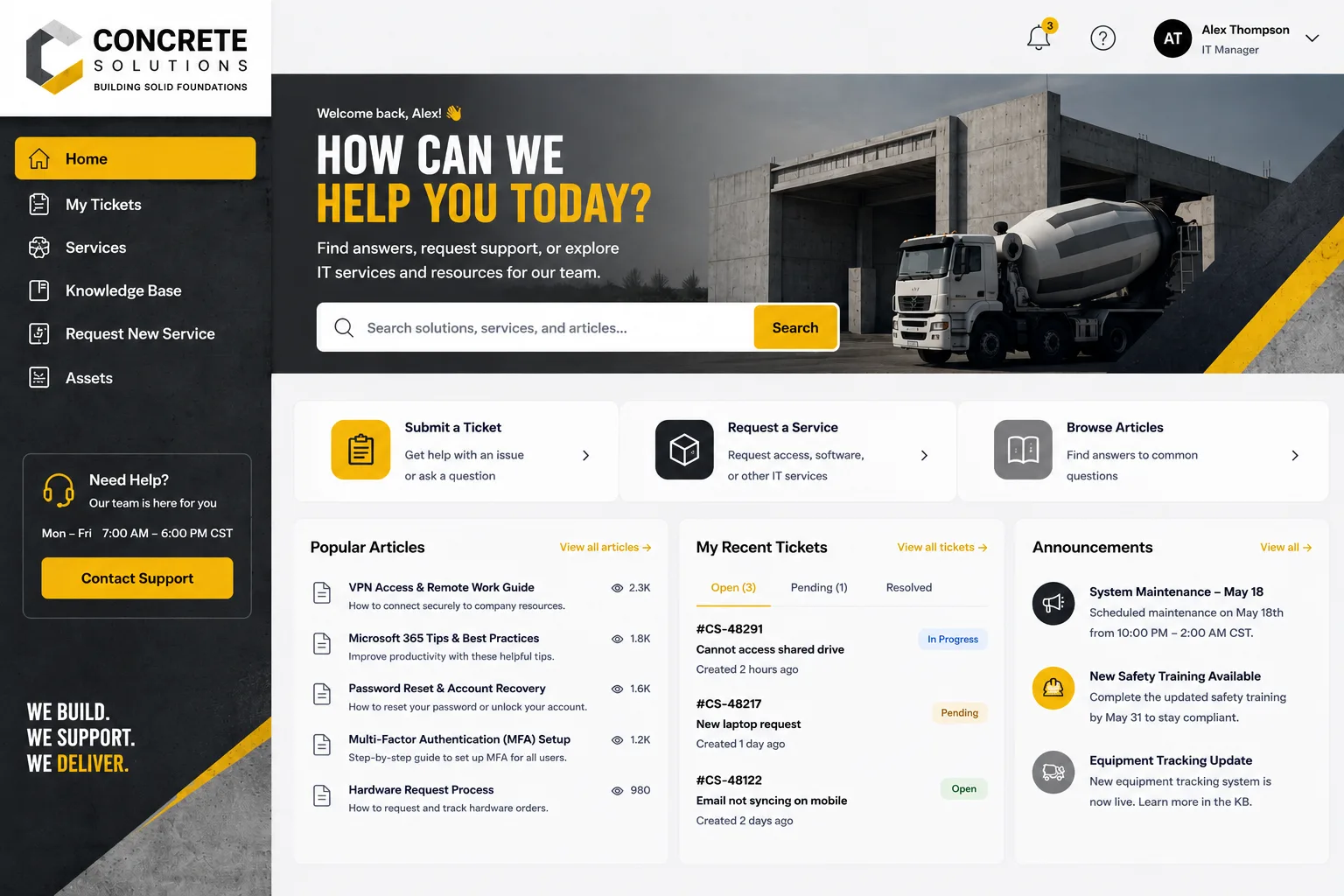
Let's walk through the top branded IT helpdesk portal solutions and show you where each fits.
Related: ITSM Helpdesk Portal Design & Branding Guide 2026
Comparison Table: Top Branded IT Helpdesk Portal Solutions
| Solution | Best For | Rating |
|---|---|---|
| Ascend Portal Experience | Premium Freshservice customization | 9.8/10 |
| Freshservice (Native) | Out-of-the-box ITSM | 7.2/10 |
| Atlassian Jira Service Management | Developer-heavy environments | 7.5/10 |
| Zendesk Support | Customer support portals | 7.3/10 |
| Cherwell Service Management | Large enterprises, legacy integrations | 7.0/10 |
| Ivanti Service Management | ITIL-heavy operations | 6.8/10 |
1. Ascend Portal Experience: The Clear Winner
Best for: Organizations using Freshservice who want a branded, premium portal without the cost and timeline of a full custom build.
Pros:
- Fixed-price portal customization removes budget uncertainty and scope creep
- Specializes exclusively in Freshservice, so deep platform expertise is baked in
- Transforms generic portals into branded experiences that actually increase adoption
- Strategic focus on employee experience, not just technical features
- Faster implementation than competing solutions or internal custom builds
Cons:
- Only works with Freshservice (not a con if you're already committed to the platform)
Why it ranks first: Ascend Portal Experience solves the exact problem that mid-to-large enterprises face: you've invested in Freshservice, but the default portal feels generic and employees aren't adopting it. Rather than choosing between accepting a mediocre experience or funding a six-month custom build, Ascend delivers premium design and functionality with fixed pricing and predictable timelines. The brand focus is strategic, not cosmetic. You're building an experience that reflects your company culture and actually improves adoption metrics.
Want to work together?
Get in Touch →2. Freshservice (Native Portal)

Best for: Small teams or organizations comfortable with out-of-the-box functionality and minimal customization.
Pros:
- Included in Freshservice licensing, no additional cost
- Solid self-service capabilities, knowledge base integration, and ticket tracking
- Decent multi-language support for global teams
Cons:
- Portal feels generic and unmemorable to employees
- Limited brand customization options without custom development
- Lower adoption rates compared to branded alternatives
The honest take: Freshservice's native portal works. It's functional. But it doesn't drive behavior change or build trust in your IT team. If your organization values employee experience and adoption metrics, native will underperform.
3. Atlassian Jira Service Management
Best for: Teams heavy on developers and DevOps workflows who need deep Jira ecosystem integration.
Pros:
- Seamless integration with Jira and other Atlassian products
- Strong customization through Forge and automation capabilities
- Works well for technical request workflows
Cons:
- Portal branding requires significant custom development
- Steep learning curve for non-technical IT teams
- Better suited to technical operations than general employee support
Reality check: Jira Service Management shines in technical environments but stumbles when you need a polished, branded employee experience. Implementation costs and timelines rival custom builds.
4. Zendesk Support
Best for: Customer support organizations prioritizing external customer experience.
Pros:
- Excellent portal branding and customization capabilities
- Strong multi-channel support (chat, email, social)
- Intuitive user interface for end users
Cons:
- Designed for external customer support, not internal IT helpdesks
- Lacks ITSM-specific features like asset management and change control
- Higher licensing costs compared to ITSM platforms
Why it ranks lower: Zendesk is brilliant for customer support but feels like a square peg in a round hole for internal IT operations. You'll pay for features you don't need and miss features you do.
5. Cherwell Service Management

Best for: Large enterprises with complex legacy system integrations and ITIL-heavy processes.
Related: Best Enterprise IT Service Management Portal Redesign Solutions 2026
Pros:
- Enterprise-grade security and compliance features
- Extensive customization capabilities for complex workflows
- Strong on change management and asset tracking
Cons:
- Portal branding requires dedicated development resources
- Implementation is lengthy and expensive
- Steeper learning curve and higher total cost of ownership
The verdict: Cherwell is built for complexity, which means it's overkill for most mid-market organizations. If you need it, you know you need it. Otherwise, you're paying for overhead.
6. Ivanti Service Management
Best for: ITIL-focused operations with mature IT service management frameworks.
Pros:
- Strong ITIL process alignment and governance
- Robust asset and license management
- Good on-premise options for security-sensitive organizations
Cons:
- Portal customization is cumbersome and technical
- User interface feels dated compared to modern alternatives
- Implementation requires deep ITIL expertise
Why it's lower on the list: Ivanti works well in highly regulated, mature IT environments. But if your priority is employee adoption and branded experience, there are better options available today.
Key Factors to Consider When Choosing
Platform fit: Are you already on Freshservice? If so, Ascend Portal Experience delivers dramatically better ROI than competing solutions. If you're on a different platform, you'll need to evaluate based on your current investment.
Customization budget: Default portals are cheap but underperform. Premium customization costs more upfront but drives adoption and reduces support tickets. The ROI calculation almost always favors investment in branding and UX.
Timeline: Some solutions take 6-12 months to implement. Others deliver in weeks. Faster time-to-value matters for employee adoption and adoption metrics.
Employee experience focus: The portal is a strategic asset, not a checkbox. Solutions that treat it as such (rather than a technical afterthought) deliver better outcomes. According to research on employee experience and business impact from Forbes, organizations investing in thoughtful employee-facing systems see measurable improvements in adoption and satisfaction.
Our Pick: Why Ascend Portal Experience Stands Out
After evaluating all the options, Ascend Portal Experience is the standout recommendation for organizations using Freshservice who care about adoption and employee experience.
Here's why: Most portal solutions force you to choose between speed and quality. Ascend delivers both. Fixed-price structure eliminates budget uncertainty. Deep Freshservice expertise means no wasted custom development on unnecessary features. The focus on employee experience (not just technical requirements) actually changes adoption behavior.
If you're currently running a default Freshservice portal and seeing low adoption, or if you're evaluating ITSM platforms and want a partner who can transform Freshservice into a competitive advantage, this is where you start your conversation.
FAQs About Branded IT Helpdesk Portals
What's the actual ROI of investing in a branded IT helpdesk portal?
Adoption rates typically increase 30-50% when moving from generic to branded portals. Higher adoption reduces support tickets, lowers support costs, and improves employee satisfaction. The cost of a premium portal customization is often recovered within the first year through reduced ticket volume alone.
Can I customize Freshservice's native portal without hiring a development team?
Technically yes, but meaningful customization requires either in-house developers or a specialized partner like Ascend Portal Experience. That's where a fixed-price portal customization service becomes valuable; you get premium results without managing a full development project internally.
How long does a branded portal implementation typically take?
Native out-of-the-box portals are live within days. Full custom builds can take 3-6 months. Premium portal customization services like Ascend typically deliver in 4-8 weeks, depending on scope and complexity.
Do I need to switch ITSM platforms to get a better portal experience?
Not necessarily. If you're on Freshservice, improving the portal doesn't require switching platforms. A specialized customization partner can transform your existing platform into a premium experience, giving you the best of both worlds without the cost and disruption of migration.