You're managing an IT service desk, and you know that simply deploying Freshservice isn't enough. Your team needs to operate within proven ITSM standards to stay aligned with business goals, maintain consistency, and deliver real value to employees who depend on your portal every day. The good news: understanding which ITSM standards matter for your portal transforms it from a generic helpdesk tool into a strategic asset.
ITSM standards are end-to-end frameworks designed to ensure your IT service delivery meets actual business objectives. They guide everything from how you create and deliver services to how you support them once they're live. When you build your Freshservice portal with ITSM standards in mind, you're not just following best practices; you're building a foundation that scales with your organization.
Related: Best Unified Portal for Freshservice ITSM Teams
Related: Best Vendor Portal for Freshservice ITSM in 2026
Why ITSM Standards Matter for Your Portal Experience
Your Freshservice portal is the front door to your entire IT operation. Employees use it to request services, check ticket status, and interact with your team. If that portal doesn't reflect ITSM principles, you're leaving adoption and satisfaction on the table.
ITSM standards push you to think strategically about service delivery alignment. They ensure that your portal's design, workflows, and user experience support your broader IT mission, not just process management. When you align your portal with established ITSM frameworks, you gain:
- Consistent service delivery across your organization
- Clearer handoffs between departments and service teams
- Better visibility into service performance and employee satisfaction
- A portal that employees actually want to use instead of avoid
The key is that ITSM standards create a roadmap. They tell you what matters, in what order. And when you apply that roadmap to your Freshservice implementation, your portal becomes more than software; it becomes a business enabler.
Core ITSM Principles That Shape Portal Design
Modern ITSM is built on core principles that enable alignment between your IT operations and your organization's strategic goals. These principles apply directly to how you should design and customize your Freshservice portal.
First, focus on the services your employees actually need, not just the tickets you can track. This means your portal should surface the most-requested services, guide users to self-service options, and make it easy for anyone to find help without knowing IT jargon.
Second, build feedback loops into your portal experience. ITSM thrives when you're continuously learning what works and what doesn't. Your Freshservice portal should gather feedback at every touchpoint, and your team should act on it. That's not optional; it's foundational to ITSM maturity.
Third, make sure your portal supports both standardized and flexible workflows. Some requests follow predictable paths; others don't. Your Freshservice portal needs to handle both without frustrating users or creating bottlenecks.
When Ascend Portal Experience builds customized Freshservice portals, these principles guide every design decision, from layout to automation. Because generic portals ignore these principles, which is why they fail to drive adoption.
Want to work together?
Get in Touch →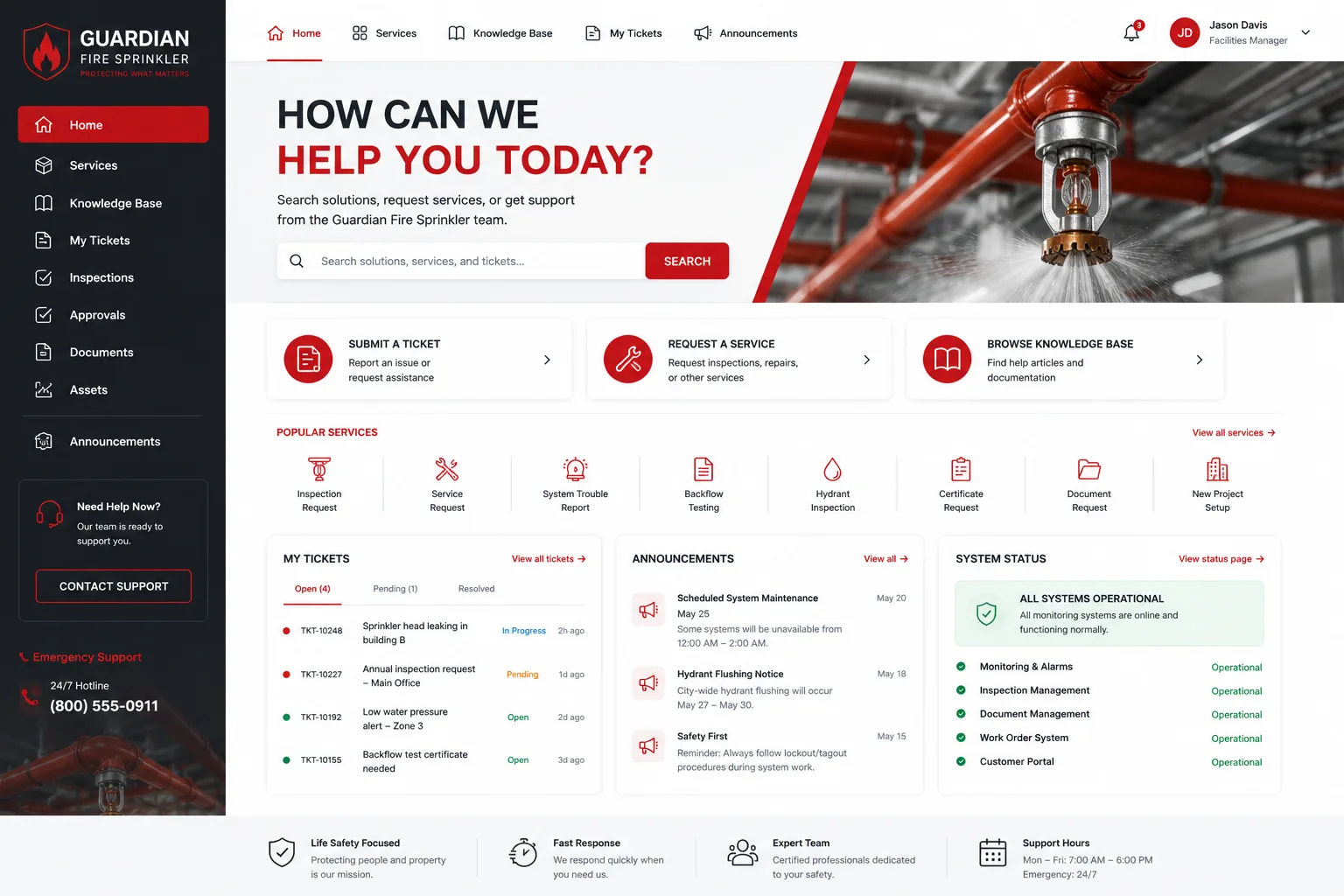
ITSM Standards and Framework Alignment
Multiple ITSM standards and frameworks exist in the market, and understanding how they complement each other is essential. Your Freshservice portal doesn't need to choose between them; instead, your portal architecture should be flexible enough to support your organization's preferred framework.
A solid ITSM standards foundation means your portal can evolve as your organization's needs change. If you start with one framework and later adopt another, your portal should adapt without requiring a complete rebuild. This flexibility protects your investment and keeps your team agile.
The service desk is a critical component of ITSM operations. It's the hub where employees submit requests, where your team resolves issues, and where the first impression of your IT organization is made. Your Freshservice portal is the front end of that service desk. If it's poorly designed, your team spends more time managing user confusion than solving actual problems.
When you align your portal with ITSM standards, you reduce friction. Employees get self-service options that actually work. Your team gets visibility and predictability. And your organization gets an IT function that operates strategically instead of reactively.
Building Your Implementation Roadmap

A structured, multi-stage implementation approach helps you avoid technical debt while maximizing the value of your Freshservice investment. This is where many organizations stumble. They deploy Freshservice and expect adoption to happen automatically. It doesn't.
Your implementation roadmap should include:
- Assessment: Understand your current state and your ITSM maturity level
- Design: Map ITSM principles to your Freshservice portal's user flows and branding
- Deployment: Roll out your customized portal with clear communication to your user base
- Optimization: Gather feedback, measure adoption, and iterate continuously
This isn't a one-time project. It's a foundation for continuous improvement. And it's where the value of aligning with ITSM standards becomes clear. Instead of chasing problems reactively, you're proactively building a portal that supports your organization's service delivery goals.
Modern ITSM: Automation and Emerging Technologies
AI and automation workflows are increasingly integrated into ITSM operations. Your Freshservice portal should be positioned to support these emerging technologies without overwhelming your users.
Smart automation can handle routine requests without human intervention. Chatbots can guide users to the right resources. Workflow automation can speed up approvals and handoffs. But all of this works only if your portal is designed to support it. A poorly designed portal will confuse users even with automation in place.
When you build your Freshservice portal with ITSM standards and emerging technologies in mind, you're not just solving today's problem; you're building for tomorrow's capabilities. Your portal becomes an asset that grows more valuable as your organization scales.
From IT Service Management to Enterprise Service Management
Enterprise Service Management (ESM) represents an evolution beyond traditional IT service management boundaries. Your Freshservice portal, built with ITSM standards as its foundation, can eventually expand to serve other departments (HR, procurement, facilities, etc.) as your organization matures.
This doesn't happen by accident. It requires thoughtful portal design from day one. A portal built to support ITSM standards creates a template that other departments can adopt and adapt. It's strategic thinking that pays dividends over time.
If you're ready to transform your Freshservice portal from a generic helpdesk tool into a branded, standards-aligned experience that drives adoption, Ascend Portal Experience can guide you through the entire process with a fixed-price approach that removes the guesswork.
Getting Started with ITSM Standards Alignment

Start by assessing where your organization stands today. Which ITSM standards or frameworks matter most to your business? What's your current adoption rate? Where are your biggest pain points?
Then, build your vision for your Freshservice portal. Not a technical specification; a user experience vision. What does success look like? How will your portal change the way employees interact with IT?
Related: Best ITSM Functions for Freshservice Portal Success
Finally, partner with a team that understands both ITSM standards and Freshservice customization. The Ascend Professional Portal Package is designed exactly for this. It combines ITSM best practices with portal customization expertise, so your team doesn't have to choose between standards alignment and user experience.
What ITSM standards should we prioritize for our Freshservice portal?
Prioritize the standards that matter most to your business strategy. If your organization is focused on efficiency, start with frameworks that emphasize process optimization and service desk operations. If user satisfaction is your goal, prioritize frameworks that guide service design and customer journey mapping. Your Freshservice portal should reflect your organization's strategic priorities, not just industry conventions.
How do ITSM standards improve employee adoption of our portal?
ITSM standards ensure your portal is designed around what employees actually need, not just what IT wants to track. When users can find services easily, get self-service options that work, and see real progress on their requests, adoption follows naturally. Standards-aligned portals reduce friction and build trust.
Can we add new services to our Freshservice portal later without breaking ITSM alignment?
Yes, if your portal is built with ITSM principles as its foundation. A well-designed portal architecture stays flexible as your services expand. This is why the planning phase matters so much. Get the foundation right, and scaling becomes straightforward.
How do emerging technologies like AI fit into ITSM standards alignment?
AI and automation enhance ITSM standards; they don't replace them. Use automation to handle routine, predictable work so your team can focus on strategic service delivery. Your Freshservice portal should support automation workflows in ways that enhance (not confuse) the user experience.