Your vendor portal is either working for you or against you. If your suppliers are struggling to place orders, check status, or submit invoices without picking up the phone, you're bleeding time and frustration on both sides of the transaction. Modern B2B procurement demands a vendor portal that actually functions like one: 24/7 accessible, intuitive, and built to your brand standards.
A well-designed vendor portal isn't just a convenience tool. It's a strategic asset that reduces manual coordination, accelerates procurement cycles, and strengthens supplier relationships by giving vendors the self-service control they expect. If you're running Freshservice as your ITSM backbone, the gap between your default portal and what your vendors actually need is worth closing.
Related: Freshservice Portal UI Improvements: What's New in 2026
Related: Best ITSM Standards Framework for Freshservice Portal
Related: Best ITSM Functions for Freshservice Portal Success
Related: Best Freshservice Portal Navigation Improvements for 2026
Related: How to Rebrand Freshservice Helpdesk Portal in 2026
Related: Best Freshservice Portal Optimization for Adoption in 2026
Related: Best Unified Portal for Freshservice ITSM Teams
What a Modern Vendor Portal Actually Does
Let's cut through the noise. A vendor portal is a secure, purpose-built environment where suppliers can register, receive purchase orders electronically, check order status in real time, and submit invoices without constant back-and-forth email chains. It's automation that pays for itself through reduced administrative overhead and faster payment cycles.
Here's what moves the needle:
- Self-service vendor registration: New suppliers onboard themselves instead of requiring IT or procurement to set them up manually.
- Electronic PO distribution: Orders flow directly into vendor systems, cutting processing time by days.
- Real-time order visibility: Vendors track their own order status 24/7, eliminating status-check emails to your team.
- Secure invoice submission: Suppliers upload invoices directly, triggering automated workflows instead of sitting in someone's inbox.
According to procurement research, organizations using self-service vendor portals report a 30-40% reduction in procurement cycle time, which translates directly to faster vendor payment and improved supplier relationships.
Why Freshservice Teams Need Vendor Portal Design That Fits
Freshservice excels at internal IT service management, but it's not always optimized for external vendor workflows out of the box. The default interface feels like what it is: a generic helpdesk, not a branded procurement environment. That gap matters. Vendors forming their first impression of your organization should see professionalism and ease of use, not a clunky ticketing system repurposed for commerce.
This is where Ascend Portal Experience bridges the gap. Purpose-built Freshservice portal customization transforms your ITSM platform into a vendor-first experience that vendors actually want to use. Custom branding, streamlined workflows, and self-service logic specific to your procurement process make the difference between a tool your vendors tolerate and one they prefer.
Related: ITSM Helpdesk Portal Design & Branding Guide 2026
Related: Freshservice Portal Design Best Practices: 2026 Guide
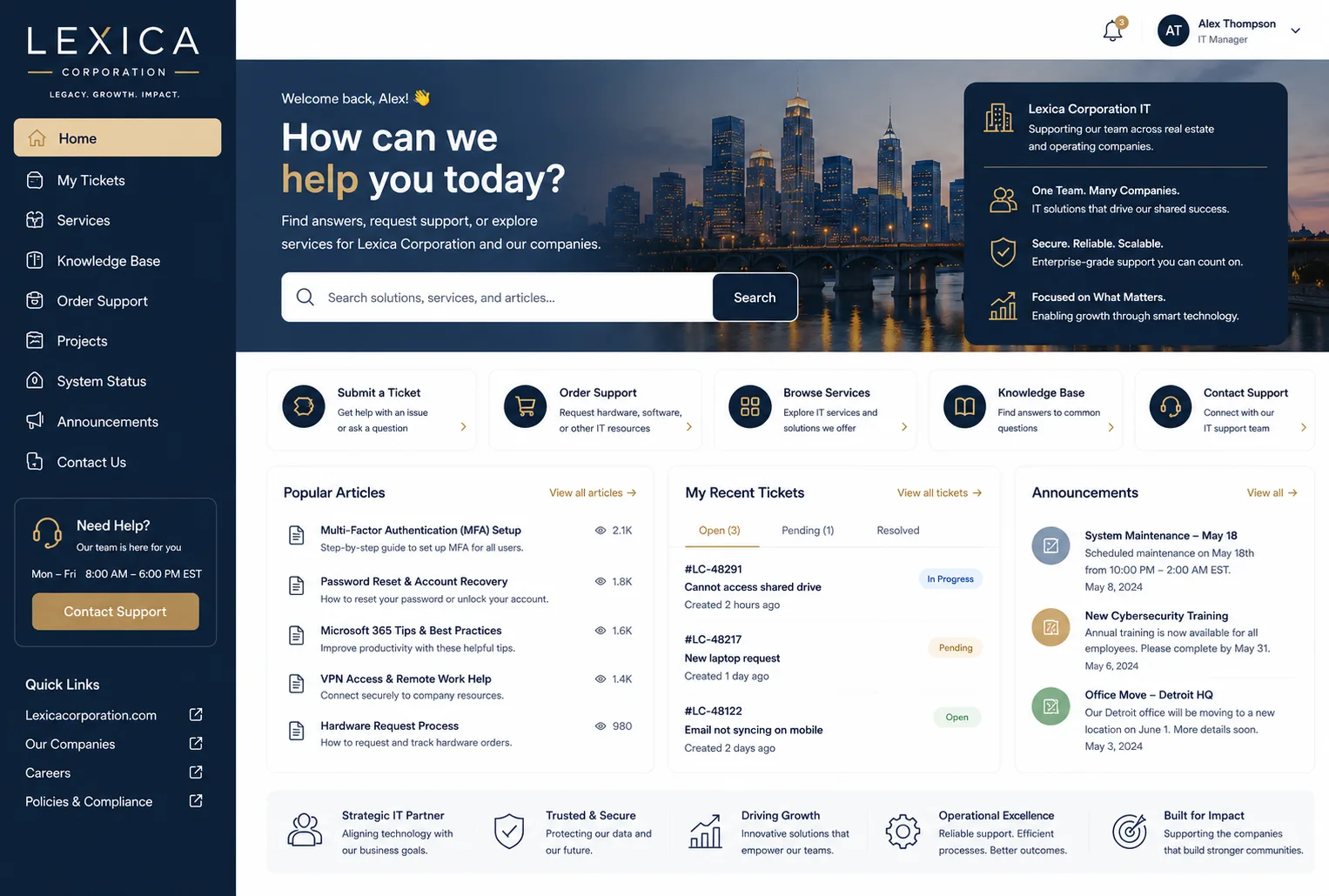
You get:
- Branded vendor experience aligned with your company identity
- Simplified workflows tailored to your specific procurement process
- Reduced support load as vendors find answers and complete tasks independently
- Stronger vendor relationships through faster, friction-free transactions
The Real Cost of Not Investing in Your Vendor Portal
Let's talk budget. A basic vendor portal customization might run $5,000 to $10,000. Enterprise-grade solutions with heavy integration and custom logic can reach $100,000 or more. That sounds like a lot until you calculate the alternative: ongoing manual vendor support, delayed procurement cycles, and vendor frustration that leaks into their perception of your organization.
Here's the math that matters: If your procurement team spends 10 hours per week on vendor coordination, status checks, and invoice troubleshooting, that's 520 hours annually. At a fully-loaded cost of $50 per hour, you're already at $26,000 in operational overhead. A vendor portal investment that eliminates even 60% of that overhead pays for itself in the first year while improving vendor satisfaction and payment speed.
Beyond cost recovery, there's strategic value. Vendors who can self-serve are happier vendors. Happy vendors are more responsive, more reliable, and more likely to prioritize your needs. That relationship advantage is worth money that doesn't show up on a spreadsheet.
What to Look for in a Vendor Portal Solution

Not all vendor portals are built equal. Here's what separates a functional solution from a strategic asset:
- Fixed pricing with transparency: You should know the investment upfront. No surprise bills or scope creep.
- Freshservice expertise: Your portal designer should know Freshservice inside and out, not be treating your platform as a generic ITSM box.
- Self-service-first architecture: The entire design should assume vendors want to solve their own problems. Make that path easier than asking for help.
- Integration-ready: Your portal needs to connect cleanly to your accounting, ERP, and fulfillment systems, not live in isolation.
- Branded design: This is your vendor's first sustained interaction with your organization's visual identity. Cheap or generic design signals cheap or generic service.
When you're evaluating options, Ascend Portal Experience applies this framework to every project. The Ascend Professional Portal Package includes discovery, custom design, implementation on Freshservice, and vendor training, all at a fixed price. No surprises. No hidden scope. Just a vendor portal that actually works.
Want to work together?
Get in Touch →Making the Vendor Portal Decision
The question isn't whether you can afford to build a better vendor portal. It's whether you can afford not to. In 2026, vendor expectations have shifted. They expect self-service. They expect 24/7 access. They expect a branded experience that reflects professionalism, not a retrofitted helpdesk interface.
If your current vendor experience is generating support tickets, delaying payments, or frustrating your best suppliers, the ROI of a modernized portal is straightforward. You're not buying a feature. You're buying operational efficiency, stronger vendor relationships, and procurement speed that actually matches your business pace.
Start by auditing your current vendor experience. Where do suppliers get stuck? Where do your team members spend the most time on vendor coordination? Those friction points are your vendor portal ROI opportunities.
Getting Started with Vendor Portal Transformation
The first step isn't technical. It's clarity. You need to understand what vendor workflows matter most to your organization, which self-service functions would eliminate the most support load, and what brand experience you want vendors to have. That's the foundation every vendor portal should be built on.
If you're using Freshservice and ready to move beyond the default vendor experience, Ascend Portal Experience specializes in exactly this transformation. We've built vendor portals for mid-to-large enterprises across manufacturing, professional services, and distribution. We know Freshservice. We know what vendors need. And we know how to build the bridge between them.
The vendors waiting on your portal right now deserve better than a generic experience. Your procurement team deserves better than manual coordination overhead. A modern vendor portal delivers both.
How much does a vendor portal actually cost?
Basic customizations typically range from $5,000 to $10,000. Enterprise solutions with heavy integration run higher, often $100,000 or more. The real investment question is ROI: How much operational overhead are you currently spending on manual vendor support? Most organizations recover their portal investment in the first 12 months through reduced coordination and faster cycles.
Can you build a vendor portal on top of Freshservice?
Yes. Freshservice has portal customization capabilities, but they require expertise in Freshservice's API, custom scripting, and UX design. The platform itself is optimized for internal ITSM, not vendor commerce, so you're often working against the grain. Purpose-built vendor portal services like those offered by Ascend Portal Experience navigate those constraints and deliver a purpose-fit experience.
What's the timeline for implementing a vendor portal?
A well-scoped vendor portal typically takes 8 to 12 weeks from discovery through launch. That includes requirements gathering, design, Freshservice customization, integration with your backend systems, testing, and vendor training. Fast-track projects can move faster; complex integrations may take longer.
How do you measure vendor portal success?
Track cycle time reduction (purchase order to fulfillment), support ticket volume from vendors, vendor satisfaction scores, and payment processing speed. Most organizations also measure adoption: What percentage of your vendors are using self-service versus requesting manual support? Higher adoption signals a portal that's actually meeting vendor needs.