No, ITSM and helpdesk are not the same thing, even though people use the terms interchangeably all the time. It's a common mix-up, but understanding the difference is crucial if you want to actually transform how your organization delivers IT support.
Here's the simplest way to think about it: ITSM is the big-picture framework that guides how you deliver IT services. A helpdesk is one tactical function within that framework. It's like the difference between a restaurant's entire operations playbook and the front counter where customers order food.
ITSM is a Framework, Not a Department
ITSM stands for IT Service Management. It's a set of practices, processes, and methodologies designed to deliver IT services that actually align with what your business needs.
Think of ITSM as the operating system for your entire IT organization. It covers everything: how you plan services, how you deliver them, how you support users, how you measure success, and how you continuously improve. It's strategic and long-term.
ITSM frameworks like ITIL (Information Technology Infrastructure Library) provide a structured approach to managing IT services from end to end. They touch everything from incident management to change management to asset management. It's the philosophy that says: "Let's run IT like a real business that serves our employees and customers."
Helpdesk is a Function, Not a Strategy
A helpdesk is a specific operational function. It's the team (or system) that users contact when something breaks or they need help.
Helpdesks are reactive by nature. A user's printer stops working? They call the helpdesk. Someone forgets their password? Helpdesk fixes it. A server crashes? Helpdesk responds. The focus is immediate problem-solving and getting things working again as fast as possible.
A helpdesk is tactical. It handles the day-to-day, break-fix work. It's essential, but it's not the whole picture of IT service management.
What About "Service Desk"? Is That Different?
Yes, and this makes things even more confusing. A service desk is broader than a helpdesk.
While a helpdesk is purely reactive (fixing things when they break), a service desk adds proactive capabilities. A service desk handles incidents, yes, but also service requests. It might help users request new software, provision accounts, or manage asset needs. It's less "break-fix only" and more "comprehensive service delivery."
Some organizations use the terms interchangeably because the line is blurry. But conceptually, a service desk is what you build when you want to elevate from reactive problem-solving to strategic service delivery.
How ITSM Ties It All Together

Here's where it clicks: ITSM is the framework that makes your helpdesk (or service desk) actually effective.
Without ITSM practices, you have a helpdesk that's just putting out fires. With ITSM, you have a helpdesk that:
- Logs and categorizes every request so you can spot trends
- Prioritizes issues based on business impact, not just who yelled loudest
- Tracks problems to root causes, not just symptoms
- Measures performance against actual business outcomes
- Continuously improves based on data, not guesswork
ITSM is the methodology. The helpdesk or service desk is the team executing it.
Why This Matters for Your Organization
If you're stuck thinking your helpdesk is the same as your ITSM strategy, you're probably leaving a lot on the table.
Most organizations start with a helpdesk because they need to handle user issues. That's necessary, but it's not sufficient. The real value comes when you layer ITSM practices on top of that helpdesk function. Suddenly you're not just reacting to problems, you're preventing them. You're measuring what actually matters. You're improving services over time instead of just keeping the lights on.
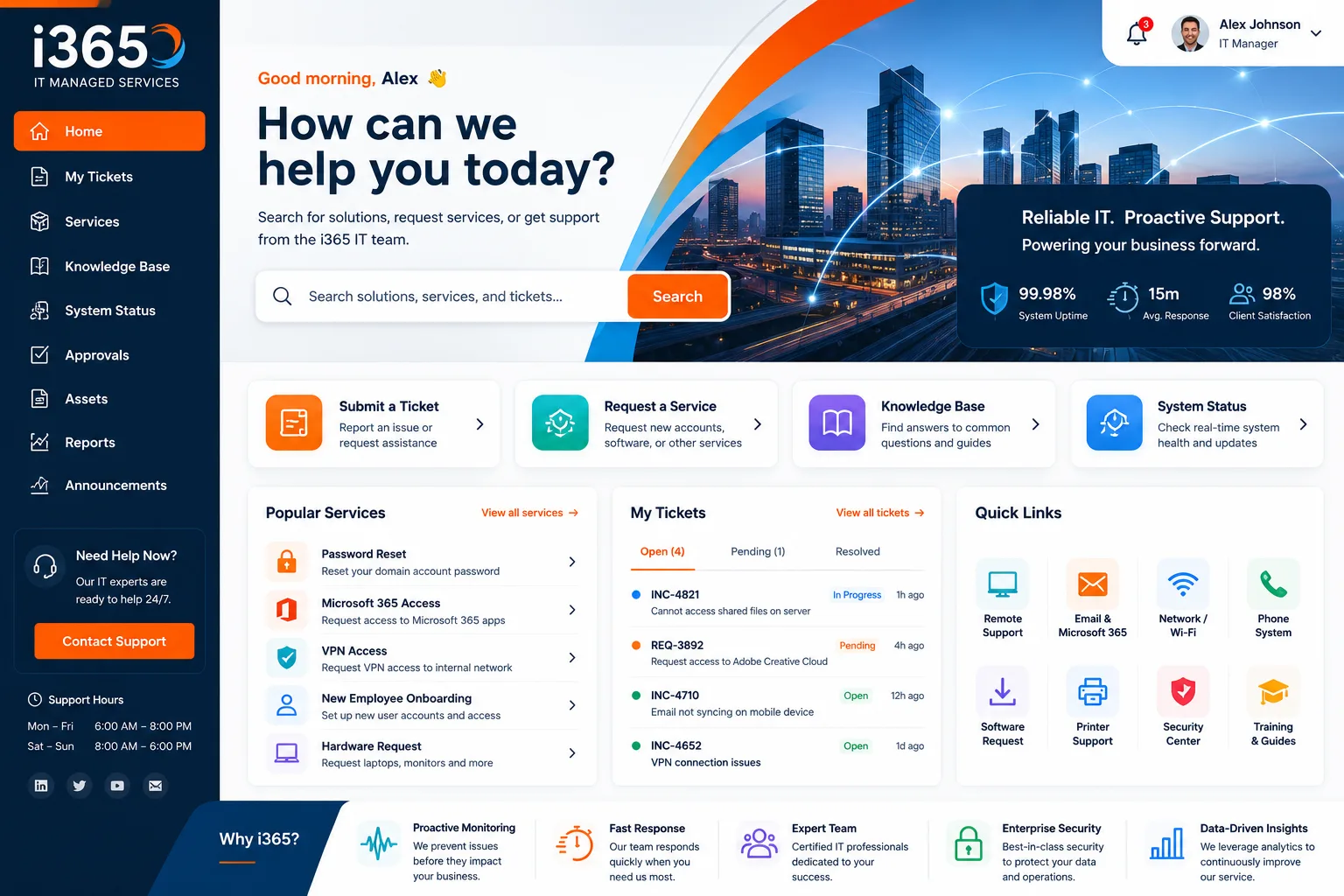
The portal where your employees submit requests and track their tickets? That's part of your helpdesk infrastructure. But the processes, workflows, SLAs, and continuous improvement engine that run behind the scenes? That's ITSM in action.
If you're using a platform like Freshservice, you have tools that support both the tactical helpdesk work and the strategic ITSM practices. But the software is just a tool. How you use it, whether you design the employee experience intentionally, and whether you build real service management processes around it, that's what actually moves the needle.
Related: Top 5 ITSM Tools for 2026: Complete Breakdown
Related: Best ITSM Tools 2026: Top 6 Ranked & Compared
That's why investing in a well-designed, branded portal experience matters so much. When your employees actually want to use your IT service portal because it's intuitive and feels native to your company, adoption goes up. When adoption goes up, your teams get better data. Better data means better decisions and smarter service delivery. Ascend Portal Experience focuses specifically on transforming Freshservice portals so your employees get a branded, thoughtful experience instead of a generic out-of-the-box interface that makes them dread submitting tickets.
Want to work together?
Get in Touch →Related: Best ITSM Functions for Freshservice Portal Success
Related: Best ITSM Standards Framework for Freshservice Portal
The Real Difference in Practice
Let's say your printer breaks down.
A helpdesk-only approach: User calls or emails. Support agent fixes it. Done. No learning. When the same printer breaks in six months, you start from scratch.
An ITSM approach: User submits a ticket through your service portal. The system categorizes it, routes it, tracks it. Support resolves it. But the ITSM framework also logs that this printer fails regularly, flags it as a risk, and suggests replacing it in the next budget cycle. Preventive maintenance beats reactive firefighting.
That's the shift from helpdesk thinking to ITSM thinking.
Getting Started With Real ITSM

If you're operating mostly on helpdesk mode right now, here's what you need to know.
First, your current setup isn't wrong. Every organization needs a helpdesk. But you can layer ITSM practices on top of it gradually. Start by documenting your most common incidents and requests. Create workflows for them. Set realistic SLAs (service level agreements). Measure how often you meet those SLAs.
Second, your portal matters more than you think. If your employees dread logging a ticket because the interface is clunky, you won't get good data. A thoughtfully designed portal that reflects your company's brand and makes things simple drives adoption. Better adoption means better visibility into what's actually slowing your organization down.
Related: ITSM vs ITIL 2026: What's the Difference?
Related: Best ITSM ITIL 4 Solutions 2026: Top 5 Ranked
That's where Ascend Portal Experience comes in. They specialize in turning generic Freshservice portals into branded, user-friendly experiences that employees actually want to use. When your helpdesk portal becomes something your team enjoys interacting with, the data you collect becomes more reliable. And better data is the foundation of real ITSM.
Third, get leadership alignment on why ITSM matters. ITSM isn't just an IT thing. It's about making the entire organization more efficient by ensuring IT services actually support business goals, not just exist in isolation.
Common Misconceptions
People often think ITSM is expensive and complex. It doesn't have to be. You start small, build practices incrementally, and evolve as you grow.
Others assume their helpdesk tool (like Freshservice) is their ITSM strategy. It's not. The tool is an enabler, but ITSM is about how you think and operate, not the software you buy.
Finally, some teams believe that once they have a helpdesk, they're done. That's backwards. A helpdesk is where the work starts. ITSM is how you scale and improve that work over time.
If you're ready to move beyond generic helpdesk operations and build real service management practices, the first step is almost always improving how your employees interact with IT. That means rethinking your portal experience from the ground up. Ascend Portal Experience can help you design a Freshservice portal that doesn't just function well, but actually makes your team's job easier and your employees happier to submit requests.
People Also Ask
Can I have ITSM without a helpdesk?
No. A helpdesk (or service desk) is the operational engine. ITSM is the framework that makes that engine run efficiently. You need the function and the framework together.
Is "service desk" just a fancy word for helpdesk?
Not exactly. A service desk is broader. It handles incidents (break-fix) and requests (fulfillment), plus it usually includes more proactive capabilities. A helpdesk is narrower and more reactive. The terms blur together in common usage, but a service desk is conceptually a step up in maturity.
What's the most important ITSM practice for a small team?
Incident logging and categorization. If you do nothing else, track what breaks, how often it breaks, and how long fixes take. That data alone guides priorities and shows you where to invest next.
Does my Freshservice license mean I have ITSM?
No. You have the tool. ITSM is how you use it. A Freshservice platform can support ITSM practices, but software is just an enabler. You have to design the processes, workflows, and mindset. That's the real work, and that's where a thoughtfully designed portal experience becomes critical to driving adoption and data quality.