ITSM vs ITIL: Understanding the Core Difference
If you work in IT operations, you've probably heard ITSM and ITIL used interchangeably. But they're not the same thing, and understanding the distinction matters for how you structure your IT services and measure success.
Here's the short version: ITSM is the practice of managing IT as a service aligned with business goals. ITIL is the framework that tells you how to do it well. Think of ITSM as the destination and ITIL as the roadmap.
Related: Help Desk vs Service Desk: What's the Real Difference?
Related: ITIL vs ITSM: What's the Real Difference?
Related: Is ITSM the Same as Helpdesk? Key Differences Explained
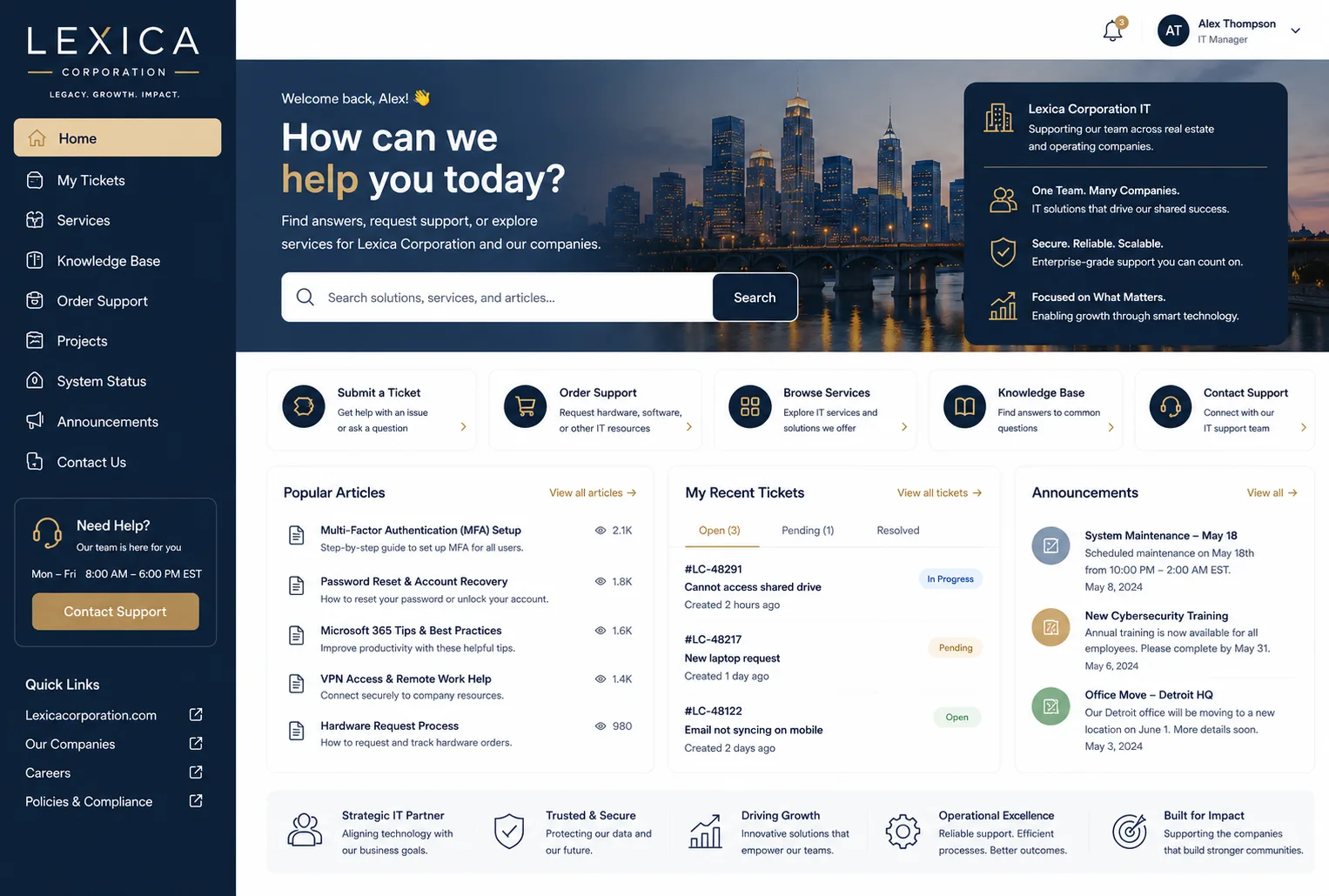
The confusion is understandable. ITIL has become the industry standard for IT service management best practices, so the two terms get tangled together. But when you're evaluating tools, building processes, or working with your team, knowing which is which makes a real difference. Ascend Portal Experience helps IT leaders implement ITSM practices through thoughtfully designed Freshservice portals that drive adoption and align with ITIL principles.
What Is ITSM?
ITSM stands for IT Service Management. It's the discipline of managing IT operations in a way that delivers value to the business and aligns with organizational goals.
ITSM isn't a checklist or a rulebook. It's a mindset. It means treating your IT department as a service provider with customers (employees, departments, executives) who have needs, expectations, and satisfaction levels you need to measure.
In practice, ITSM covers areas like:
- Incident management: responding quickly when systems go down
- Change management: controlling updates and modifications safely
- Problem management: finding root causes and preventing future issues
- Service request fulfillment: handling routine employee requests efficiently
- Asset management: tracking and optimizing IT resources
The goal of ITSM is operational alignment: IT becomes a strategic partner that enables business success rather than just a cost center that fixes broken things.
What Is ITIL?
ITIL stands for the Information Technology Infrastructure Library. It's a set of best practices, guidelines, and frameworks developed over decades to help organizations implement ITSM effectively.
ITIL is prescriptive. It tells you not just what to do, but how to do it. It provides templates, processes, roles, metrics, and communication standards that IT teams can adopt and adapt to their own environment.
ITIL is organized into lifecycle phases:
- Service Strategy: understanding business needs and aligning IT investments
- Service Design: planning services that meet those needs
- Service Transition: deploying changes and managing risk
- Service Operation: running services day-to-day and handling incidents
- Continual Service Improvement: measuring performance and optimizing over time
Many IT teams use ITIL as their framework for implementing ITSM. It's not mandatory, but it's the most widely adopted standard globally.
ITSM vs ITIL: Head-to-Head

| Aspect | ITSM | ITIL |
|---|---|---|
| Definition | Practice of managing IT operations as a business service | Framework and best practices for implementing ITSM |
| Scope | Broad: aligns IT with business objectives | Specific: prescriptive processes and guidelines |
| Role | Defines what needs to be done | Defines how to do it |
| Flexibility | Adaptable to any organization | Structured but customizable |
| Focus | Business outcomes and customer satisfaction | Process excellence and compliance |
| Implementation | Ongoing operational discipline | Structured framework adoption |
Real-World Example: Incident Management
Let's say an employee can't access a critical application during a business-critical project.
ITSM tells us what needs to happen: the IT team must respond quickly, resolve the issue, and minimize business impact. The focus is on the outcome: the employee gets back to work and the business stays on track.
ITIL provides the how: define severity levels, establish escalation paths, set response time targets, document the issue, analyze root cause, implement a fix, communicate with stakeholders, and update the knowledge base to prevent recurrence. ITIL gives you the process template and guardrails.
Both matter. ITSM sets the goal. ITIL provides the playbook.
Do You Need Both?
Yes. You need ITSM philosophy to keep business alignment at the center of everything your IT team does. You need ITIL (or a similar framework) to translate that philosophy into repeatable, measurable processes that your team can execute consistently.
Want to work together?
Get in Touch →Many organizations adopt ITIL as their ITSM framework because it's battle-tested, widely understood, and proven to work across industries and company sizes.
The bigger challenge isn't usually picking a framework. It's making sure your IT team actually uses it and that your services genuinely solve problems for employees. That requires not just process documentation, but a user experience that makes it easy for employees to request help, track their issues, and trust IT.
Ascend Portal Experience specializes in helping IT teams operationalize ITSM and ITIL principles through custom-designed Freshservice portals that employees actually want to use. A well-designed portal bridges the gap between best practices and real adoption.
Related: Best Custom ITSM Portal Implementation 2026: Top 5 Ranked
Related: Best ITSM Tools 2026: Top 6 Ranked & Compared
Related: Top 5 ITSM Tools for 2026: Complete Breakdown
Related: Best ITSM ITIL 4 Solutions 2026: Top 5 Ranked
How to Use ITSM and ITIL in Your Organization
Start with ITSM philosophy. Define what "service" means in your company. What are employees' expectations? What does the business need from IT? Set those objectives first.
Choose a framework. ITIL is the standard, but you might also evaluate COBIT, DevOps practices, or a hybrid approach depending on your industry and maturity level.
Map your processes. Take the framework and customize it to your reality. Document incident management, change control, asset tracking, service request workflows, and other critical areas.
Select the right tools. Your ITSM platform (like Freshservice) should support your chosen framework and make it easy for teams to follow the process without friction. Too often, IT teams build solid processes but then bury them in clunky tools that employees and staff avoid.
Invest in the user experience. A portal is your public face. Employees judge your IT department largely by how easy it is to request help and track progress. Ascend Portal Experience helps transform Freshservice portals into branded, intuitive experiences that drive adoption and reinforce your ITSM commitment.
Measure and improve. Set KPIs around incident resolution time, change success rate, employee satisfaction, and asset accuracy. Use data to refine your processes continuously.
Common Misconceptions
"ITIL and ITSM are the same thing." They're related but distinct. ITSM is the discipline; ITIL is one proven framework for practicing it.
"If we adopt ITIL, we're doing ITSM." Not necessarily. You can follow ITIL processes perfectly on paper and still fail at ITSM if your services don't actually align with business needs or if employees can't easily access them. Process compliance doesn't guarantee business value.
"ITSM is only for large enterprises." ITSM principles scale. Smaller organizations benefit from service-oriented thinking and basic incident/change management just as much as Fortune 500 companies.
"ITIL requires complex tools and lengthy implementations." ITIL can be simple or complex depending on your organization. Start with one or two core processes and expand over time.
The Strategic View
Here's what matters most: ITSM is about treating IT as a value creator, not just a cost. ITIL is the proven playbook for making that happen at scale. Together, they help IT teams build credibility, reduce risk, and support business growth.
The organizations that win at this balance are the ones that take both seriously. They define what good service looks like, adopt a structured framework to deliver it, and constantly measure whether they're actually meeting expectations. They also make sure their portal and tools reflect that commitment to service excellence, making it effortless for employees to engage.
If you're running Freshservice and want to accelerate your ITSM maturity while improving employee adoption, the portal experience is one of your highest-leverage investments. Ascend Portal Experience can help you design and implement a portal that reinforces your ITSM principles and makes your ITIL processes work harder in practice.
Frequently Asked Questions
Is ITIL mandatory for ITSM?
No. ITIL is the most widely adopted framework for ITSM, but you can practice ITSM with other frameworks, methodologies, or a custom approach. What matters is that your IT operations align with business goals and are repeatable and measurable.
Can we implement ITIL without ITSM?
Technically yes, but it defeats the purpose. You could follow ITIL processes perfectly and still fail at service delivery if you're not focused on business alignment and customer satisfaction. ITIL without ITSM thinking becomes bureaucracy.
Do we need ITIL certification to implement ITSM?
No. ITIL certification (available at Foundation, Practitioner, and Expert levels) is valuable for individual career development and helps teams speak a common language, but it's not required to implement ITSM principles or ITIL practices in your organization.
How does portal design fit into ITSM?
Your portal is where employees experience your ITSM commitment. A well-designed portal removes friction from service requests, empowers self-service, and reinforces your IT team's professionalism. A poor one undermines even the best processes and ITIL frameworks.