Here's the quick answer: ITSM is what you do (the practice of managing IT services), and ITIL is how you do it (a specific framework that guides that practice).
Think of it like cooking. ITSM is the discipline of preparing food for customers. ITIL is one particular cookbook that tells you the best recipes and techniques to follow while you're doing it. You could use other cookbooks too, but ITIL is the most widely adopted one in IT organizations.
This distinction sounds simple, but it changes how you think about your IT operations. If you're confused about the difference, you're not alone, and Ascend Portal Experience works with plenty of IT leaders who are sorting through these exact concepts as they build their service delivery strategy.
Related: What Are the 4 Ps of ITIL Service Strategy?
ITSM Is the Broader Practice
ITSM stands for IT Service Management. It's the overall discipline of delivering IT services that align with your business goals.
When you practice ITSM, you're focused on a few core things:
- Delivering reliable IT services that support business operations
- Managing incidents, problems, and changes in a structured way
- Optimizing costs while keeping service quality high
- Making sure employees and customers get what they need from IT
ITSM isn't owned by anyone. It's not trademarked. It's just a professional discipline that says, "Hey, let's manage IT services in a thoughtful, intentional way instead of just reacting to fires all day."
Any organization that runs an IT helpdesk or manages IT operations is practicing some form of ITSM, whether they know it or not. The question isn't whether you do ITSM, it's how well you do it.
ITIL Is a Specific Framework for ITSM
ITIL stands for Information Technology Infrastructure Library. It's a specific, detailed framework that tells you how to implement ITSM best practices.
ITIL provides you with:
- Defined processes (incident management, change management, asset management, etc.)
- Best practices based on decades of IT operations experience
- A shared vocabulary so teams can communicate clearly
- Guidance on how processes should interact with each other
ITIL is the most popular framework for implementing ITSM, which is why so many organizations are either already using it or considering it. It's become the standard language for IT service management across industries and company sizes.
But here's the thing: ITIL is not the only framework out there. There are others like Cobit, DevOps practices, or hybrid approaches. You could practice excellent ITSM without following ITIL exactly. That said, ITIL adoption usually makes communication easier and helps you avoid reinventing the wheel.
The Key Differences Explained
Let's break down the main distinctions so you can talk about these confidently:
Scope and Reach: ITSM is the umbrella. It covers everything about managing IT services to meet business needs. ITIL is one specific shade under that umbrella, offering a proven way to get there.
Guidance vs. Execution: ITIL gives you the playbook. It says, "Here's how incident management should work. Here are the steps. Here are the roles." ITSM is the act of running those processes day in and day out, regardless of which playbook you follow.
Flexibility: When you say you practice ITSM, you're leaving room to customize. You might blend ITIL with DevOps, add your own tweaks, or adapt practices to your industry. When you say you follow ITIL, you're committing to a more standardized approach.
Adoption: ITSM adoption means building a service-oriented culture in IT. ITIL adoption usually means implementing specific processes, getting certified, and aligning your tools (like your IT service management platform) to support ITIL workflows.
How They Work Together

Here's where it gets practical: most organizations use ITIL as their framework to practice ITSM. You decide to adopt ITSM as your operating philosophy. Then you pick ITIL as your guide for how to build that philosophy into actual processes and systems.
Your IT helpdesk tool, your ticketing system, your change approval workflow, your knowledge base, your asset tracking, your reporting dashboards, your incident escalation path, your problem management process, and your communication templates all flow from ITIL best practices designed to support ITSM goals.
If you're using a modern IT service management platform like Freshservice, it's built with ITIL principles embedded into its workflows. When Ascend Portal Experience helps organizations customize their portals and service delivery interfaces, we're often working within an ITIL-informed structure that's already in place.
Want to work together?
Get in Touch →Why This Distinction Matters for Your Business
You need to understand the difference because it affects how you plan, budget, and communicate about IT service improvements.
If someone says, "We need to adopt ITSM," they're talking about a cultural and operational shift toward service-centric thinking. That's a bigger, messier, longer-term initiative.
If someone says, "We need to implement ITIL," they're talking about a more defined project: adopt ITIL processes, align tools, get teams certified, document procedures, and measure against ITIL metrics.
Both are worth doing. In fact, they usually happen together. But knowing the difference helps you understand whether you're planning a transformation or a structured implementation.
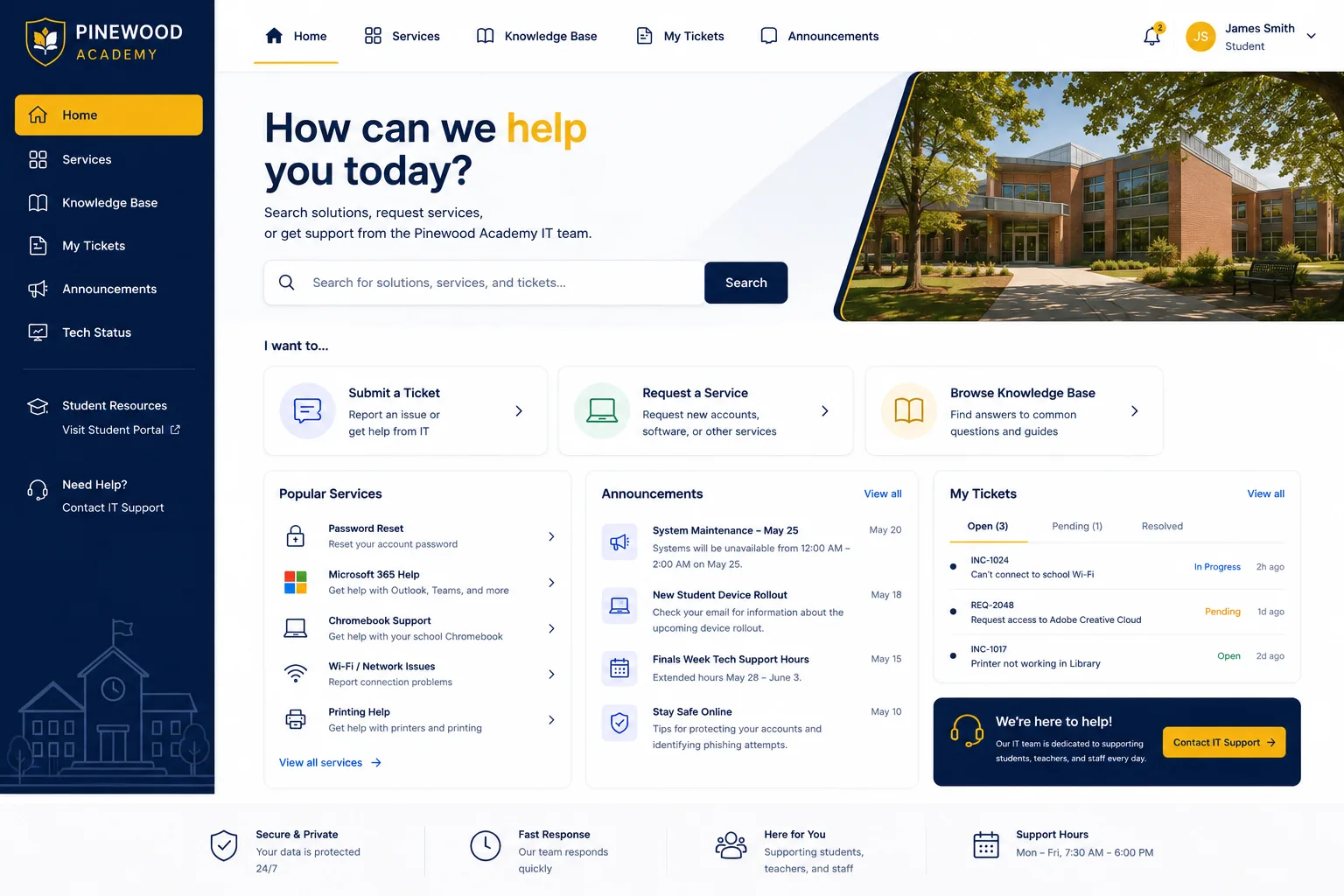
When you're redesigning your IT service portals and employee-facing interfaces, this matters too. Your portal should reflect the service management philosophy you've chosen. A well-designed portal makes ITSM practices stick by making them easy and intuitive for employees to use. That's where detailed attention to user experience and portal customization becomes a strategic advantage.
Moving from Theory to Practice
So you understand the difference now. What's next?
Related: Freshservice Portal UI Improvements: What's New in 2026
Related: ITSM vs ITIL 2026: What's the Difference?
Related: Best ITSM ITIL 4 Solutions 2026: Top 5 Ranked
If you're building or improving your IT service delivery, start by clarifying your ITSM goals. What do you want your IT operations to achieve for the business? Better incident response? Reduced downtime? Faster change deployment? Happier employees?
Related: Help Desk vs Service Desk: What's the Real Difference?
Then decide if ITIL is the right framework to get you there, or if you want to blend it with other approaches. Most mid-to-large enterprises find that ITIL aligns well with their scale and complexity.
Finally, make sure your tools and interfaces support your chosen framework. Your helpdesk, your portal, your workflows, and your reporting all need to be configured to support ITSM practices. If your employees are using a generic, hard-to-navigate IT portal, they won't engage with your ITSM processes no matter how well designed they are. That's why investing in a branded, user-friendly portal experience matters. If you want to explore how to transform your Freshservice portal into a strategic asset that actually reinforces your service management practices, Ascend Portal Experience specializes in exactly that kind of customization.
Key Takeaways

- ITSM is the practice; ITIL is a framework to guide that practice
- ITSM is broader and more flexible; ITIL is more structured and prescriptive
- Most organizations use ITIL as their framework for implementing ITSM
- Understanding the difference helps you plan strategy and communicate change initiatives clearly
- Your portal and tools should support whichever approach you choose
People Also Ask
Can you practice ITSM without ITIL?
Yes, absolutely. You can practice excellent IT service management using other frameworks, DevOps principles, or a hybrid approach. ITIL is the most popular framework, but it's not the only one. What matters is that you're intentional about aligning IT services with business outcomes.
Do you need ITIL certification to practice ITSM?
No. ITIL certification is helpful for individuals who want to demonstrate expertise and for organizations that want a standardized approach to training. But you can absolutely practice world-class ITSM without anyone on your team being certified. Certification is a credential, not a prerequisite for good service management.
Is ITIL outdated?
Not outdated, but evolving. ITIL Version 4, released in 2019, was updated to include modern practices like Agile, DevOps, and Lean. The core principles remain relevant because IT still needs to align with business goals, manage change, handle incidents, and optimize costs. The framework has modernized to reflect how IT organizations actually work today.
What's the relationship between ITIL and my helpdesk software?
Most helpdesk and IT service management platforms are built with ITIL processes in mind. Your ticketing system, workflows, approval chains, knowledge base, and reporting features are typically designed to support ITIL practices like incident management, change management, and problem management. The better your software is configured to your ITSM approach, the more effective your processes become.