ITSM guidelines are the backbone of any organized IT operation. They're a structured set of processes designed to manage the full lifecycle of IT services, from planning and design all the way through to delivery and support. If your IT team is running on ad-hoc workflows and reactive fixes, ITSM guidelines give you the roadmap to move into proactive, business-aligned service management.
The real value? When you follow established ITSM guidelines, your IT operations stop being seen as a cost center and start becoming a strategic asset that drives business outcomes. Let's walk through what you need to know to get started.
Related: Best ITSM Capabilities for Employee-Focused Service Desks
Related: Is ITSM the Same as Helpdesk? Key Differences Explained
What Are ITSM Guidelines, Exactly?
ITSM guidelines are best practice frameworks that tell you how to structure your IT service management processes. They cover everything: incident management, change management, service requests, asset tracking, and more.
The core idea is simple: stop handling IT problems randomly. Instead, define a repeatable process for every type of IT need your organization faces. When you do that consistently, you reduce waste, improve employee satisfaction, and get better visibility into what's actually happening in your IT operations.
Related: ITSM vs ITIL 2026: What's the Difference?
Related: Top 5 ITSM Tools for 2026: Complete Breakdown
Related: Best ITSM Tools 2026: Top 6 Ranked & Compared
Related: Best ITSM ITIL 4 Solutions 2026: Top 5 Ranked
Think of ITSM guidelines as the playbook your team follows. Without them, every team member makes their own rules. With them, everyone knows exactly what to do when a ticket comes in, how long it should take to resolve, and who owns each step.
Step 1: Start by Defining Your Business Outcomes
Before you implement anything, get crystal clear on what you're actually trying to achieve. Don't just say "improve IT." That's too vague.
Instead, ask yourself: What does your business need from IT? Do you need faster incident resolution? Better employee onboarding? Fewer service interruptions? More visibility into IT spending?
Write down 3-5 specific business outcomes. Make them measurable if possible. This becomes your North Star when you're building out your ITSM guidelines. Every process you create should ladder back to one of these outcomes.
Step 2: Choose a Best Practice Framework
You don't have to invent ITSM guidelines from scratch. Industry-standard frameworks exist for a reason. The most widely adopted frameworks provide guidance on the full service lifecycle, covering design, transition, operation, and continual improvement.
Pick a framework that matches your organization's size and complexity. You don't need to adopt every single aspect of a framework right away. Start with the core processes that matter most to your business outcomes.
The key is having a recognized, structured foundation. This makes it easier to train your team, onboard new people, and measure whether your ITSM initiatives are actually working.
Step 3: Map Out Your Current State

Take an honest look at how IT actually works in your organization right now. Not how you think it works, but how it really works.
What processes exist today? Where are the bottlenecks? What gets stuck in email chains? Where do people have to ask three different people for an answer? Where are your biggest pain points?
Document this. You need to understand the gap between your current state and where you want to be. This gap is what your ITSM guidelines will close.
Step 4: Design Your Core ITSM Processes
Now you're ready to design the actual processes. Start with the highest-impact areas based on your business outcomes.
For most organizations, this means focusing on incident management (how you handle problems), change management (how you make updates safely), and service requests (how employees get what they need from IT).
For each process, define:
- What triggers the process?
- Who is responsible at each step?
- How long should each step take?
- What data do you need to collect?
- How do you know the process is complete?
Write these down clearly. Don't assume people will figure it out.
Step 5: Implement a Platform to Support Your Processes
ITSM guidelines only work if you have a tool that enforces them. This is where a proper ITSM platform becomes essential.
The right platform gives you a centralized place where all service requests, incidents, and changes flow through the same defined process. It routes work to the right people, tracks everything in real time, and gives you visibility into whether you're actually meeting your SLAs and business outcomes.
But here's the thing: a generic, out-of-the-box ITSM platform with no customization can feel clunky and frustrating to your employees. When your portal looks and feels generic, adoption suffers. People bypass it and go back to email.
Related: Best ITSM Functions for Freshservice Portal Success
Related: Best ITSM Standards Framework for Freshservice Portal
That's where thoughtful portal design matters. Ascend Portal Experience specializes in transforming your ITSM platform into something that actually reflects your organization and makes it easy for employees to use. A well-designed, branded portal that follows your ITSM guidelines can dramatically improve adoption and employee satisfaction.
Want to work together?
Get in Touch →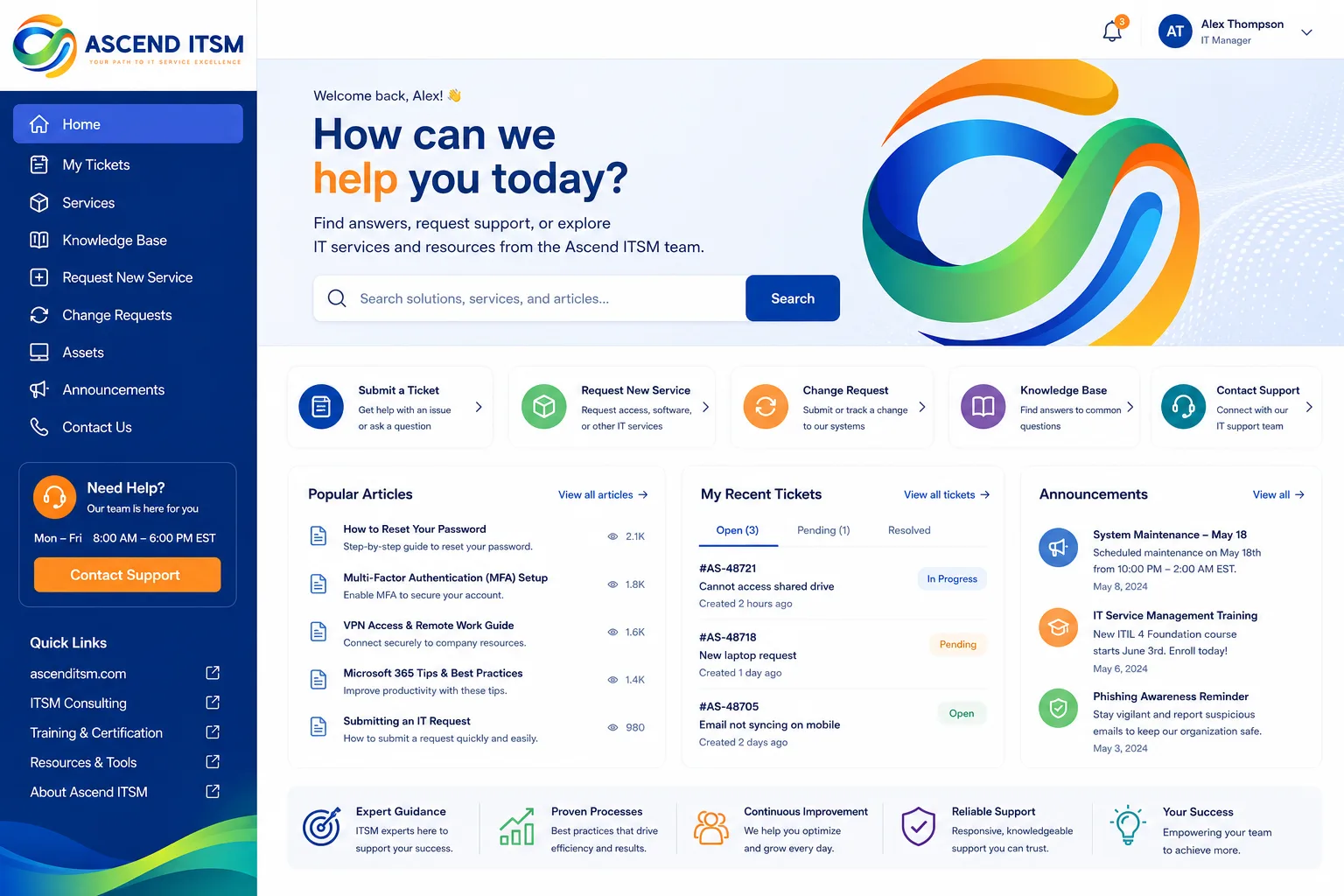
Step 6: Measure, Train, and Continuously Improve

Once you've defined your ITSM guidelines and implemented them in a platform, your job isn't done. You need to make the guidelines stick.
Train your team on the new processes. Show them why each step matters. Make sure everyone understands their role. Give them time to adjust.
Then measure your results against the business outcomes you defined in Step 1. Are incidents getting resolved faster? Are employees more satisfied? Is IT spending more predictable?
You'll find things that need tweaking. That's normal. ITSM guidelines are living documents. Review them quarterly. Update them based on what you're learning. Celebrate wins with your team.
Why ITSM Guidelines Matter Right Now
If your organization is growing or your IT demands are increasing, ITSM guidelines stop you from descending into chaos. They keep your team focused, your processes consistent, and your employees happy.
The cost of not having solid ITSM guidelines is high: duplicated work, missed deadlines, employee frustration, security risks, and IT teams burning out because nothing feels structured.
The upside of implementing ITSM guidelines is equally real: faster resolution times, better budget control, higher employee satisfaction, and an IT function that people actually trust.
If you're ready to move beyond generic ITSM processes and build a customized, branded experience around your guidelines, Ascend Portal Experience can help you design a portal that brings your ITSM vision to life.
FAQs About ITSM Guidelines
What's the difference between ITSM guidelines and ITSM best practices?
Guidelines are recommendations for how to structure your processes. Best practices are proven methods that have worked for other organizations. Most ITSM guidelines are built on best practices. Think of guidelines as your implementation roadmap and best practices as the lessons learned from others who've walked that road before you.
Do I need to follow ITSM guidelines if I'm a small IT team?
Yes, but scale it to your size. You don't need every process. Pick the 2-3 that cause the most pain in your organization and start there. Even a small team benefits from defined processes because it reduces confusion and makes onboarding easier.
Can ITSM guidelines work across different departments, not just IT?
Absolutely. Many organizations are adopting Enterprise Service Management, which applies ITSM principles to HR, finance, facilities, and other departments. The core idea of structured processes and service delivery applies anywhere you have requests and incidents to manage.
How long does it take to implement ITSM guidelines?
That depends on your current state and the complexity of your organization. Start with a 3-6 month timeline for defining and piloting your core processes. Full organizational adoption usually takes longer. The key is starting now rather than waiting for perfect conditions.