Getting employees to actually use your IT helpdesk portal is harder than it sounds. You launch it, send out an announcement, and then... crickets. Adoption stalls. Tickets pile up anyway. Sound familiar?
The good news: you can fix this. How to increase IT helpdesk portal adoption comes down to making self-service so easy and valuable that your team uses it naturally. Here's what works.1. Integrate With Tools Your Team Already Uses
Your employees live in Slack, Microsoft Teams, email, and their project management tools. They don't want to open yet another app to submit a ticket.
Bring the portal to them. Embed portal access directly into Slack or Teams so they can file requests without context switching. Integrate with single sign-on (SSO) so login is frictionless. The fewer barriers between "I have a problem" and "problem submitted," the higher your adoption will climb.Related: Best Freshservice Portal Optimization for Adoption in 2026
2. Build a Self-Service Knowledge Base That Actually Solves Problems
A knowledge base only works if it answers the questions employees actually ask. Too many portals have generic articles that don't match real tickets.
Start by pulling your top 20-30 ticket categories from the last six months. Create detailed articles for each one. Then test them: can your team find and follow the instructions? If not, rewrite them. Your knowledge base should deflect simple issues immediately, which takes load off your support team and gives employees faster answers.3. Add AI-Assisted Self-Service and Smart Triage
AI chatbots are no longer nice-to-have. Employees expect intelligent routing. A well-trained chatbot can handle password resets, onboarding questions, and common troubleshooting steps without a human agent ever seeing the ticket.
This does two things: it resolves user issues faster, and it shows your team that self-service actually works. Nothing kills adoption faster than a knowledge base that doesn't work or a portal that makes problems worse. Smart triage ensures simple issues never reach your support queue.4. Make Self-Service the Default Path

Design your portal workflows so self-service options come first. When someone lands on your portal, they should encounter knowledge articles and troubleshooting steps before they see "contact support." This isn't about hiding the human support option. It's about naturally leading people toward faster solutions.
If your portal requires 10 clicks to reach a knowledge base and 2 clicks to email the help desk, guess where everyone will go? Make all paths lead to self-service first.5. Run a Grassroots Awareness Campaign
Adoption doesn't happen with a single launch announcement. You need sustained, repeated messaging from multiple angles.
Start small. Have IT leaders send personal messages to their teams. Feature portal tips in your company newsletter. Create short video walkthroughs showing how to use key features. Host optional "office hours" where employees can ask questions live. Each touchpoint reinforces the message: "The portal works. Use it."Consistency matters more than volume. Repeat the same core messages across channels, month after month, until behavior actually changes.6. Highlight What Your Support Team Gains
Your IT staff needs to buy in. If your help desk agents resist the portal, employees will sense it and abandon it too.
Show your team how self-service adoption makes their jobs better, not harder. Fewer simple, repetitive tickets means they can focus on complex problems that actually need expertise. Deflected tickets reduce burnout and improve morale. When you frame it this way, your support team becomes your biggest cheerleader for the portal.7. Ensure Portal Design Supports User Behavior

The look and feel of your portal matters more than you think. A confusing, generic-looking helpdesk portal feels like extra work. A clean, branded, intuitive portal feels like a professional tool worth using.
This is where portal design and customization come in. If you're working with Freshservice, Ascend Portal Experience specializes in turning standard portals into branded, user-friendly experiences that your team actually wants to use. A well-designed portal removes friction and drives adoption naturally.Want to work together?
Get in Touch →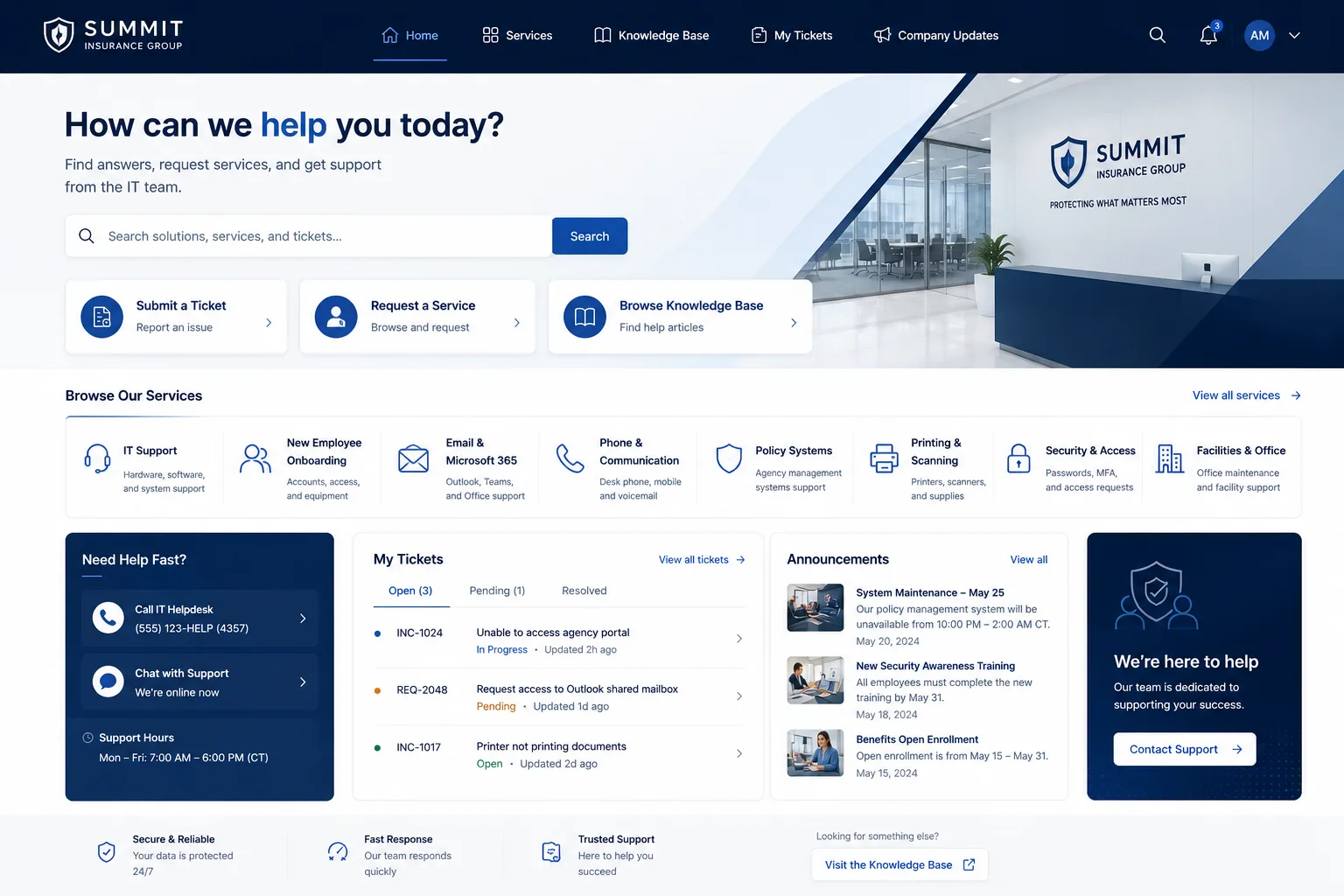
Measure What Matters
Track adoption metrics from day one. Watch your self-service ticket deflection rate, knowledge base search volume, portal logins, and time-to-resolution for deflected issues. These numbers show you what's working and where you need to adjust.
If deflection stalls, it usually means your self-service content doesn't match real problems. If knowledge base searches are low but ticket volume is high, your team doesn't know the portal exists yet. Use these signals to keep improving.Beyond Launch: Plan for Long-Term Change
Portal adoption isn't a one-time project. It's an ongoing discipline. New employees join constantly. Technology changes. User needs shift.
Build a long-term change management plan: quarterly communications, regular content updates based on new ticket patterns, periodic portal improvements, and continuous training. The teams that see sustained adoption treat it like a strategic initiative, not a checkbox to complete.Getting Help With Portal Strategy
If your Freshservice portal isn't driving adoption the way it should, the bottleneck is often design and user experience, not the software itself. Ascend Portal Experience helps IT teams transform their portals from generic tools into branded experiences that employees use without hesitation. Strategic portal customization can be the difference between 20% adoption and 80% adoption.
Related: Best Employee Helpdesk Portal User Experience in 2026
People Also Ask
What's the biggest reason employees don't use IT helpdesk portals?
The portal either doesn't actually solve their problem, or they don't know it exists. If your knowledge base can't handle their issue or if communication is weak, adoption fails. Make sure self-service works first, then broadcast it relentlessly.
Related: How to Rebrand Freshservice Helpdesk Portal in 2026
How long does it take to see adoption improvements?
Quick wins (like adding a chatbot or improving search) can move the needle in weeks. Sustained adoption usually takes 3-6 months of consistent effort. The teams that see the fastest results treat adoption as a change management discipline, not a side project.
Should we force employees to use the portal?
No. Mandatory policies backfire. Instead, make the portal so valuable and frictionless that using it feels like the obvious choice. When employees see faster resolution times and less friction, they choose self-service on their own.
How do we know if our portal is designed well enough?
Watch your metrics. If ticket volume stays high but self-service usage is low, your portal likely has UX problems. Test it with actual users and iterate based on their feedback. A portal that looks professional and works intuitively will always see higher adoption than a generic one.